
A Narrow Change in Warp Tension
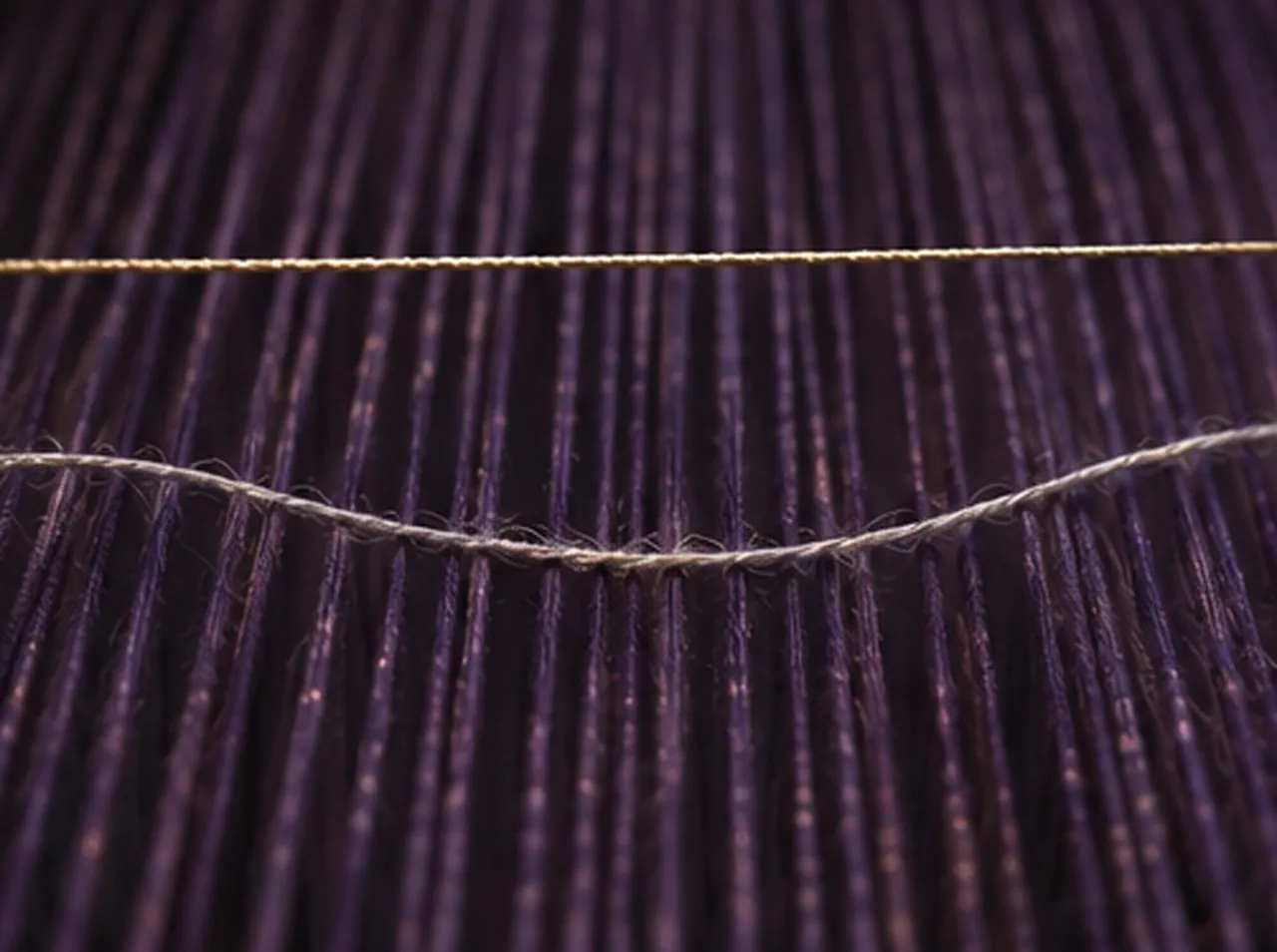
The first cloth test stretched two nearly identical threads across a simple frame. Under even light each appeared to follow the same dark line. Pulling a little more on the right one flattened a raised part of the weave. That could move a bright point in the cloth, even though the tailor had not touched the star stitch directly. This study holds one point upright on the frame and asks what the earlier position can tell a player about the small change around it.
Keep a fixed point outside the test fiber
Put a delicate pale mark near the outer frame. It is far enough from the pull not to move and near enough to remain within the useful view. The dark line on the left can pass closely beside it. Loosen the right thread and watch the light sink a little under it. As the right side tightens, the star-shaped bit of yarn above the fabric shifts toward the left. A Robe That Remembers North uses a steady point beside a moving garment for a related purpose. In this small view it reveals which direction the light is moving after the cloth changes.
Try the pull from the other side of the frame
A standing tailor normally approaches the warp at an angle. Two neighboring threads can look farther apart before the shorter one is pulled. Set the frame sideways and find the thread near the outside mark again. Leave a longer length of fabric in view beyond that area. If one dot shifts toward the thicker seam, the player can check a second point without taking the hand away. This movement should feel different from simply moving the frame in the light. A stable reference and the dark underside of the lower strand help preserve the difference from both views.
Decide when to keep one line loose a little longer
When the right thread tightens, the earlier part of the pattern can become visually sharper while the far corner is slightly distorted. The tailor can stop before pulling the right line completely taut. Ask which bright point needs to align with the old edge, and how the other one responds before deciding whether to pull another loop. The Missing Thread of Lyra gives the player a similar choice with a replacement fiber. A first attempt can be too tight and still teach them where the older line was pointing. A different pull can keep the original shape within reach.
Keep the high and low contrast pieces apart
Use a small change in shadow at the point where the right fiber meets the band. A purple thread can become less distinct beside another at the brightest point. Put its front edge against a plain section of the cloth. Light on a wider part should describe the difference in tension without turning the whole fabric into a signal. In A Light That Follows the Hem another moving piece receives a reflection after the robe turns. The visible thread near the warp does not need that much drama to show where the fabric changes position.
Tell the next weaver which view answered the question
At the end of the sample, give a player the option to set both pulls back to the first position. Ask which nearby point they would keep in view before trying a second change. A coherent answer should locate the seam and the reference or the lower shadow and the bright point. We can then consider how the observation transfers to a darker edge of the prototype without changing the design of the whole robe. The difference between the lines has to stay small enough that a tailor can make a second motion before losing the first reading of the material.