
A Light That Follows the Hem
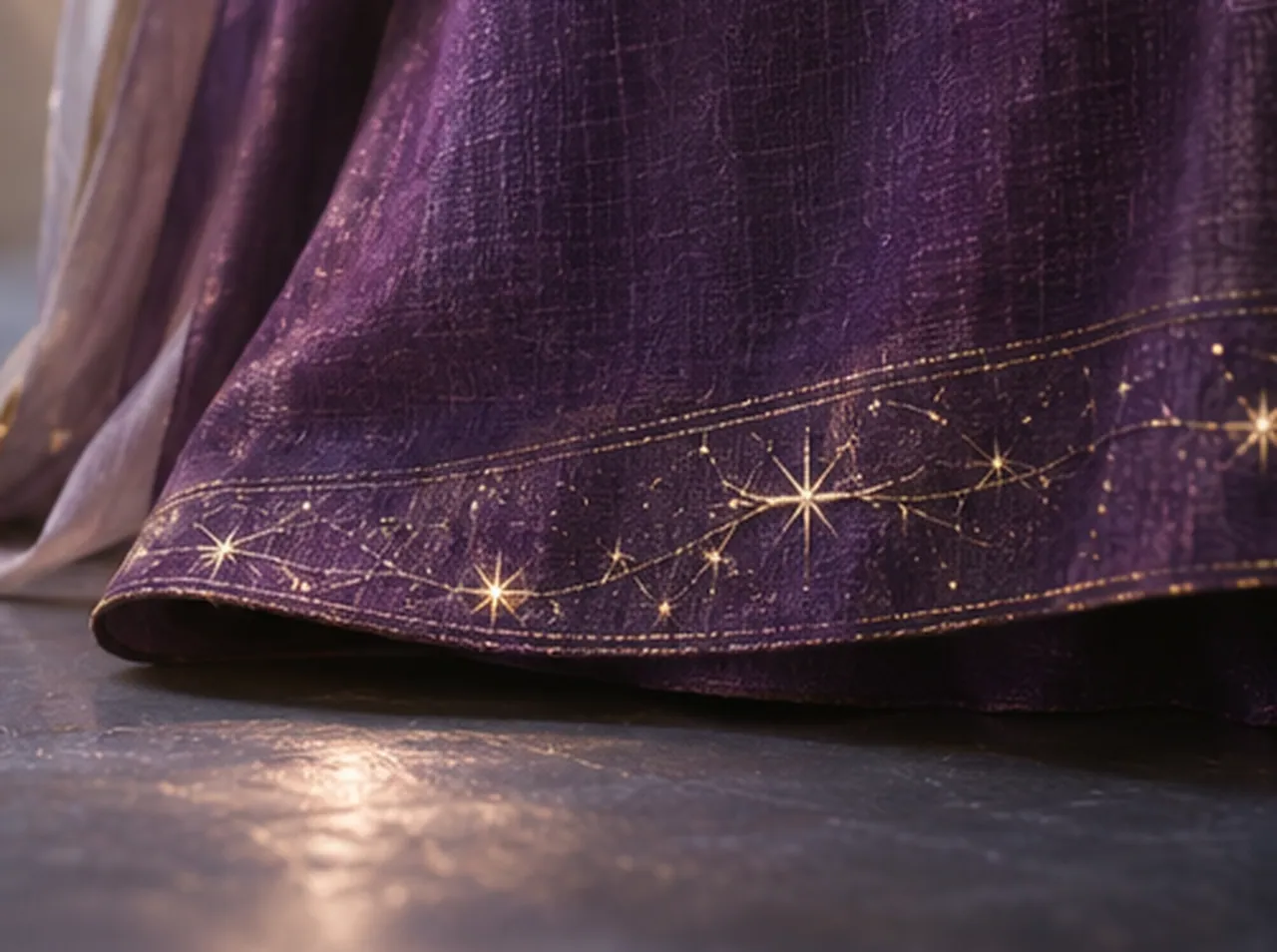
The first hem design used a thin gold stripe that shone whenever the cloth turned toward a single warm light. It gave the robe a readable edge from farther away. The same reflection could also be mistaken for a point that the cloth had carried upward in its weave. This study puts two different lights at the edge of one folded garment and asks what a tailor can still see after lowering it onto a table.
Let one small point belong to the thread
Draw a deeper stitch below the broader gold edge. Its tiny point can stay visible through a bend so long as the seam is still within view. Give the nearby part of the cloth a similar color in shadow. The bright point can be located by its position in the stitches when the lower view gets darker. A Robe That Remembers North uses a steady outside reference alongside something that belongs to the cloth. The hem study begins with the inside reference and adds the outside light only once it is clear where its reflection will reach.
Place a reflection that can travel elsewhere
Use a low light beyond the worktable so its wide stripe crosses one area of the hem while the narrower stitched point remains farther in. On the first lift, the wider light may fall in the same line as the stitch. The player can turn a little more and watch it move across an edge that does not carry the star point. Read North after Turning the Cloth uses one surviving knot and an outside point from the same frame. Here a shift in angle should likewise make it possible to compare a traveling reflection with a piece of the weave itself.
Let the edge stay quiet during the comparison
The whole hem should not have to glitter to show one moving thing. A shorter bright area can make the folded layer legible against its shadow while part of the seam stays dimmer. Give the tailor a place to stop the lift, so a soft movement of the reflection does not sweep past the useful view without warning. A Narrow Change in Warp Tension checks a related change in one quiet band. In this exercise hold the front of the fold still long enough to look at the two small lights separately. The fabric can keep its richness farther down where the garment comes away from the table.
Follow the lowered side before changing the pattern
When the seam moves back down, the distant light can appear first along the frame rather than the hem. The stitched point remains within reach of the near edge as another layer settles. Ask which part still carries a reference to the original pattern. The Missing Thread of Lyra gives the tailor a reason to return to a point after an early repair changes the look of the cloth. This movement can draw attention to the place where a growing reflection appeared to extend its foot. A comparison after the fold shows which part of the original point remains useful within another view.
Test the example in a less tidy weave
An early hem drawing is tightly ordered. The next trial can leave more texture where the stripe crosses the cloth. Give the tailor a chance to name the steady point before following the reflection again. If they can explain what moved and where the seam still holds something, the distinction can stay clear with a more textured garment. The prototype does not need to make every woven edge glow in the same way. It can keep a small point of reference and one wider light on the same material, with a meaningful action that makes the difference visible.