
Read North after Turning the Cloth
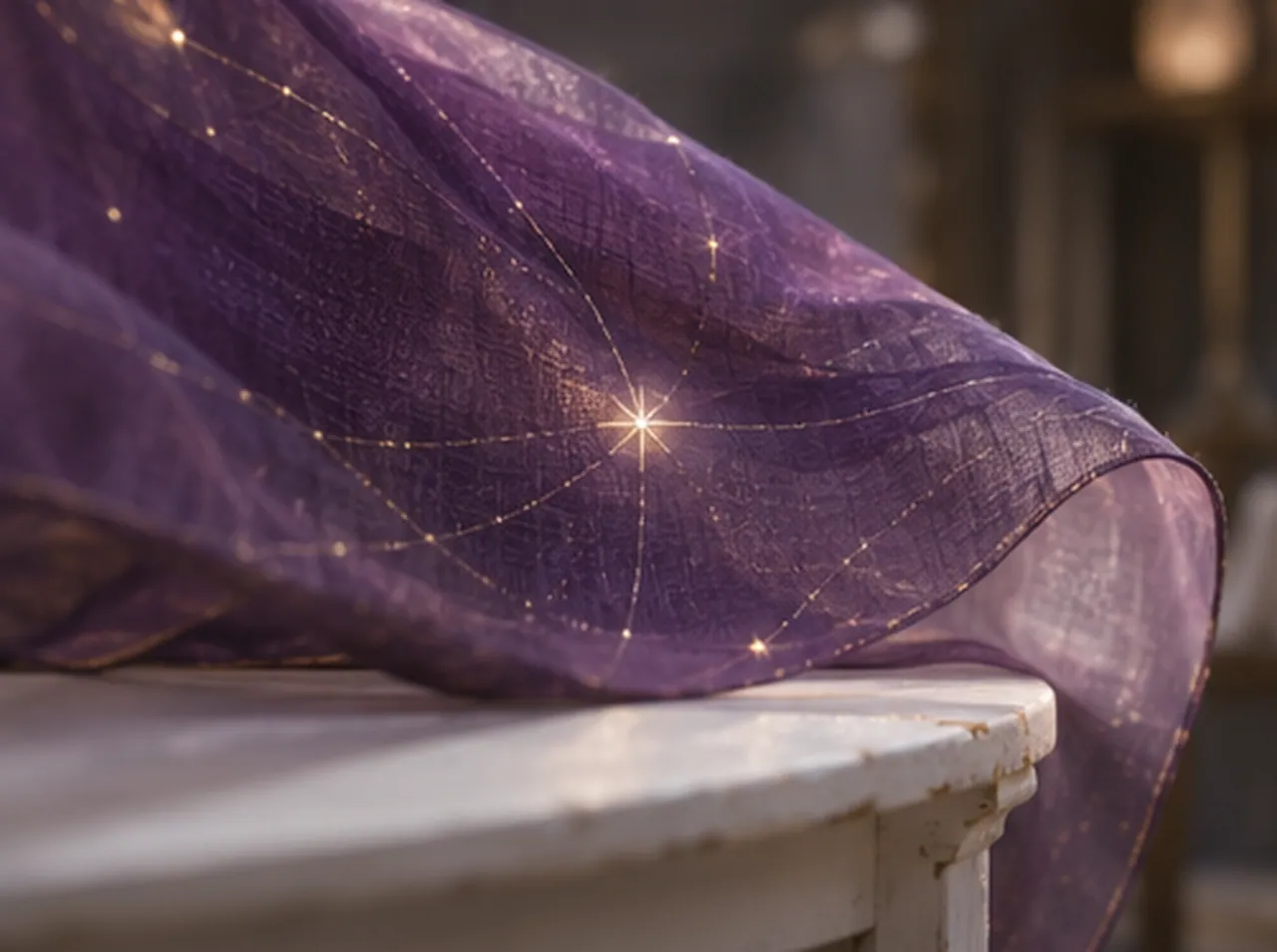
A cloth tailor lays a robe across a pale worktable. Its longer stitch runs toward a bright point at the far corner. A first trial allowed the garment to turn halfway and asked the player to find the same direction again. The silk was still recognizable in a general sense but no position near the fold held a stable relation to the earlier view. We began by making a particular stitch visible on the side that would remain near the light after the turn.
Find the seam before asking anyone to rotate it
Set the garment near the edge of the table. A thin stitch follows the side facing the player and takes a sharper turn near a slightly thicker knot. The bright point can sit beyond the middle of the seam without looking like a direct extension of it. That leaves a short relation somebody can locate again from another place. A Robe That Remembers North uses an outside point to ground a direction that might otherwise become difficult to see after a fold. The first action asks the player to put the seam and the nearby point in one simple drawing.
Keep an earlier observation while the cloth moves
As the hand lifts the corner, a wide patch of fabric rises into a shallow wave. One of the marked points comes out of view. The thicker knot remains visible through the first turn. Move the cloth just far enough to keep that knot near the part of the frame that still shows the fixed outside light. The player can decide whether to retain the direction in which the knot had faced or note where it has moved. Either choice should give them a way to find the seam after it drops. The original view can be revisited before making another turn if the relationship is not yet clear.
Bring the folded back edge onto the table
Place the lifted material on the other side and let it settle. An apparent straight edge near the light may be that of another part of the garment. Read the surviving knot in the side view before declaring that the visible edge is the first seam. A Narrow Change in Warp Tension uses one still point to check what happens when the thread itself pulls tight. In this test the seam can keep its marks while its direction changes. Comparing the far light with the knot makes it possible to draw the old and new positions without presuming every brightly lit line points north.
Read the star pattern alongside the direction
Let a faint stitch near the neck become visible in the fabric after the turn. It may lead toward a star whose relation to the old seam is different from the nearest point of cloth. Keep its shape simple enough to recognize from a view along the table. A Light That Follows the Hem works with a related distinction between a light that belongs to the garment and one that changes position as the robe turns. As the room becomes bigger, the stable direction can become a way to read more than one glowing stitch without counting every bright edge twice.
Leave a second view for someone returning
Show a different tailor the original drawing of the point and the seam. Ask what they can use after the cloth turns once. If they can locate the thick knot and use the far light again, the pattern gives a direction across both positions. If they immediately point to the new edge of the fold, the test needs a clearer point of origin. Preserve both drawings on the worktable so the movement stays inspectable. The robe can then carry a remembered direction without needing the surrounding fictional workshop to remain fixed.